
Kauaʻi, Hawaiʻi
Chief Kalani Vierra
November 21 live show with Chief Kalani Vierra
Key idea Chief Kalani Vierra brings the local lifeguard perspective: observe conditions, respect warnings, and make the decision before entering the water.
Kauaʻi · Hawaiʻi · The world
From Hawaiʻi to communities around the world, Deep Dive Into Water Safety brings together lifeguards, researchers, clinicians and educators working to prevent drowning. Through their conversations, discover what makes water dangerous, what research is teaching us and how knowledge can save lives.
“Anyone can drown, no one should.” World Health Organization
Follow the podcast
Choose your app, then tap Follow for new episodes.

Expert voices
Kauaʻi, Hawaiʻi
November 21 live show with Chief Kalani Vierra
Key idea Chief Kalani Vierra brings the local lifeguard perspective: observe conditions, respect warnings, and make the decision before entering the water.

Oʻahu, Hawaiʻi
Before the Rescue
Key idea Chief Kurt Lager looks beyond the rescue to prevention and the systems that can keep emergencies from happening.

Hawaiʻi
Personal Flotation Devices
Key idea Kanesa Duncan Seraphin discusses the importance of personal flotation devices (PFDs) for safety on the water.

Maui, Hawaiʻi
Beyond the Towers: How Maui Is Rethinking Ocean Safety
Key idea Maui Ocean Safety Chief Zack Edlao discusses prevention beyond guarded beaches, visitor education, community partnerships and rescue watercraft.

Brazil
Drowning Is Preventable
Dr. David Szpilman of Brazil is an internationally recognized leader in drowning prevention and resuscitation. His work helps us understand drowning as a process, why early intervention matters, and how timely rescue and resuscitation can save lives.

Italy
Full-Face Snorkel Masks and Children
Key idea Dr. Laura Trapani discusses pediatric findings and safety concerns involving full-face snorkel masks.

United Kingdom
The Physiology of Drowning
Key idea Professor Mike Tipton explains how the body responds in water and why regaining control can matter in an unexpected emergency.

United States
Drowning CPR and Lifeguarding
Key idea Dr. Justin Sempsrott connects drowning science to practical rescue, ventilation, CPR, and the small details that can change an outcome.

Hawaiʻi
Diana Nyad and Jellyfish Protection
Key idea Dr. Angel Yanagihara shares the story of her work helping Diana Nyad address jellyfish hazards during her long-distance swim.

Australia
Rip Currents and Beach Safety
Key idea Professor Rob Brander translates rip-current research into better beach decisions, clearer public messages, and safer behavior before entering the water.
These clips are a starting point. Explore more conversations with water safety experts from Hawaiʻi and around the world.
Explore all interviewsAfter opening an outside resource, use your browser’s Back button to return here.
Official State of Hawaiʻi ocean safety guidance to review before heading to the beach, including hazards, conditions and safer choices.
Waterman and lifeguard Brian Keaulana and his daughter Haʻa share Hawaiʻi ocean knowledge, respect for changing conditions, and advice for visitors and families.
Swimming Lessons and Beach Safety
CPR and Its Importance to Families
Before snorkeling, check current equipment safety warnings. The U.S. Consumer Product Safety Commission has warned consumers to stop using OUSPT full-face snorkel masks because of a drowning hazard. This warning concerns OUSPT masks specifically, not every full-face snorkel mask.
Read the official CPSC warningResearch by Dr. Angel Yanagihara explores jellyfish venom and sting treatment. Learn about her research on jellyfish stings and treatment.
Watch the UH video on jellyfish sting researchFind lifeguarded beaches across Hawaiʻi, review lifeguard schedules, and learn about ocean hazards before you go.
Find Lifeguarded Beaches in HawaiʻiKauaʻi North Shore update: Wanini (Anini) Beach now has a lifeguard tower, staffed daily from 8 a.m. to 6 p.m. It is not yet included on the state list. Read the County of Kauaʻi announcement.
Watch the documentary about Duke Kahanamoku and his legacy of ocean knowledge and aloha.
Explore Nā Kama Kai’s ocean safety learning resource for children and families.
Discover Nā Kama Kai’s music and booklet for young ocean learners.
See Reef and her team behind the scenes.
Help children discover what lifeguards do, how they keep people safe, and why it is good to talk with a lifeguard before entering the ocean. Available for purchase through the Hawaiian Lifeguard Association.
Selected figures from public health agencies. Time periods and populations differ; sources are provided below each group.
World Health Organization · 2021 estimates
People died from drowning worldwide in 2021.
Of global drowning deaths occurred in low- and middle-income countries.
Drowning was the fourth leading cause of death among children ages 1–4 worldwide.
Source: WHO drowning fact sheet (2021 estimates).
Hawaiʻi Department of Health · dates shown for each measure
Highest resident drowning rate among U.S. states, 2019–2023.
Children ages 1–15 died from drowning in Hawaiʻi, 2019–2023.
Of fatal drowning victims were visitors, 2019–2023.
Of snorkeling fatalities involved visitors, 2014–2023.
Source: Hawaiʻi Department of Health data in the 2025 Hawaiʻi Water Safety Plan, pages 12–14. The plan identifies 2023 mortality data as provisional.
United States: The CDC also documents the burden of nonfatal childhood drowning. Read CDC drowning prevention information.
Choose a category below. Play the podcast episodes and the published KKCR live programs here. New interviews will be added as they are released.
Loading recordings…
Evidence Behind the Conversations
Dr. David Szpilman and colleagues describe where prevention, recognition, rescue, and care can change the outcome. This visual summary follows their published model; it is not a timed countdown or a reproduction of the journal figure.
Actions can make a difference before, during, and after an incident.
The original 2016 model maps triggers and interventions in more detail. Its phases describe a sequence, not fixed numbers of minutes.
The 2024 American Heart Association and American Academy of Pediatrics update, coauthored by Szpilman, describes the progression in severe drowning incidents:
Many drowning incidents do not progress to arrest. For a suspected emergency, call emergency services and follow current training; in-water rescue breathing is for trained rescuers when it is safe.
More from Szpilman’s prevention work: SOBRASA: Who we are (English). Source: Szpilman et al., Drowning timeline: a new systematic model of the drowning process (2016); Dezfulian et al., Resuscitation Following Drowning (2024).
Research and programs guests shared with Margaret by email or discussed on the show. Journal links go to the published versions of papers; presentation slides and private correspondence are not posted here.
Research on the drowning process and how to interrupt it.
His overview of drowning in the New England Journal of Medicine.
Prevention, recognition, rescue, and care.
The original paper behind the visual above.
A clinical review written with Dr. Paddy Morgan.
English-language beach, freshwater, and flood prevention videos from SOBRASA and ILS Americas.
Floating, water safety lessons, and research translated into public advice.
Research on teaching water safety to young people.
How research informed a public floating campaign.
The National Water Safety Forum campaign discussed in his email.
A study Tipton pointed Margaret toward.
Mike Tipton and colleagues examine the human and economic impact of UK drowning deaths using 2023 data.
Teaching skills that help children recognize and respond to water risk.
The new England framework and education pathway.
Practical advice and campaign resources.
Research shared ahead of their conversations.
Saunders and colleagues on gaps in the WHO drowning report.
Yanagihara and colleagues on the monthly arrival of box jellyfish.
Yanagihara and Wilcox examine common first-aid practices.
Her UH research profile, with publications on jellyfish stings. UH research on jellyfish sting treatment
Read about her jellyfish-safety role on Nyad’s Cuba-to-Florida swim and her input on the film.
Māori water safety and connection to wai (water) in Aotearoa New Zealand.
Explore Māori water safety resources that connect culture, knowledge and respect for water.
Programs the Australian guests sent Margaret after their interviews.
An Indigenous-led lifeguard and water safety program.
Surf and ocean learning connected with Brook’s work.
Bruce “Hoppo” Hopkins’s floating education program.
More guest work on specific water risks.
Trapani and colleagues report a pediatric case series.
Freediving and spearfishing prevention programs shared by Niki Roderick’s team.
The U.S. Consumer Product Safety Commission warns consumers to stop using OUSPT full-face snorkel masks immediately because of a drowning hazard. This warning concerns OUSPT masks specifically; it should not be interpreted as a warning covering every full-face snorkel mask brand.
A federal contracting notice describes work related to testing snorkel masks, associated with Dr. Rachel Lance and MedShock Analytics. This is a notice about testing work, not a published study or final safety findings. The notice alone does not establish how many masks were tested, which models were included, or the results.
Snorkeling research
Start with the Hawaiʻi evidence, then look at studies of full-face masks. Laboratory findings and case reports raise important questions, but they do not explain every snorkeling death.
A Hawaiʻi study of medical examiner cases, possible mechanisms, and questions that need further investigation.
John Lippmann, David Szpilman, and colleagues review published evidence about who is affected and what prevention research is missing.
Rachel Lance and colleagues tested mask designs and breathing resistance; the results did not identify a single cause of snorkeler deaths.
Hanna van Waart, Simon Mitchell, and colleagues compared full-face masks with conventional snorkels in a controlled setting.
Dr. Laura Trapani and colleagues describe pediatric cases and concerns about breathing and mask removal.
Practical advice on conditions, buddies, equipment, and full-face masks, with the evidence limits stated clearly.
Rip current science and safety education
Dr. Junwoo Choi studies how to forecast rip-current hazards. Toshinori Ishikawa and colleagues investigate AI detection and recognition. Their work sits alongside research and safety education from Rob Brander, Jamie MacMahan and Bruce Hopkins.
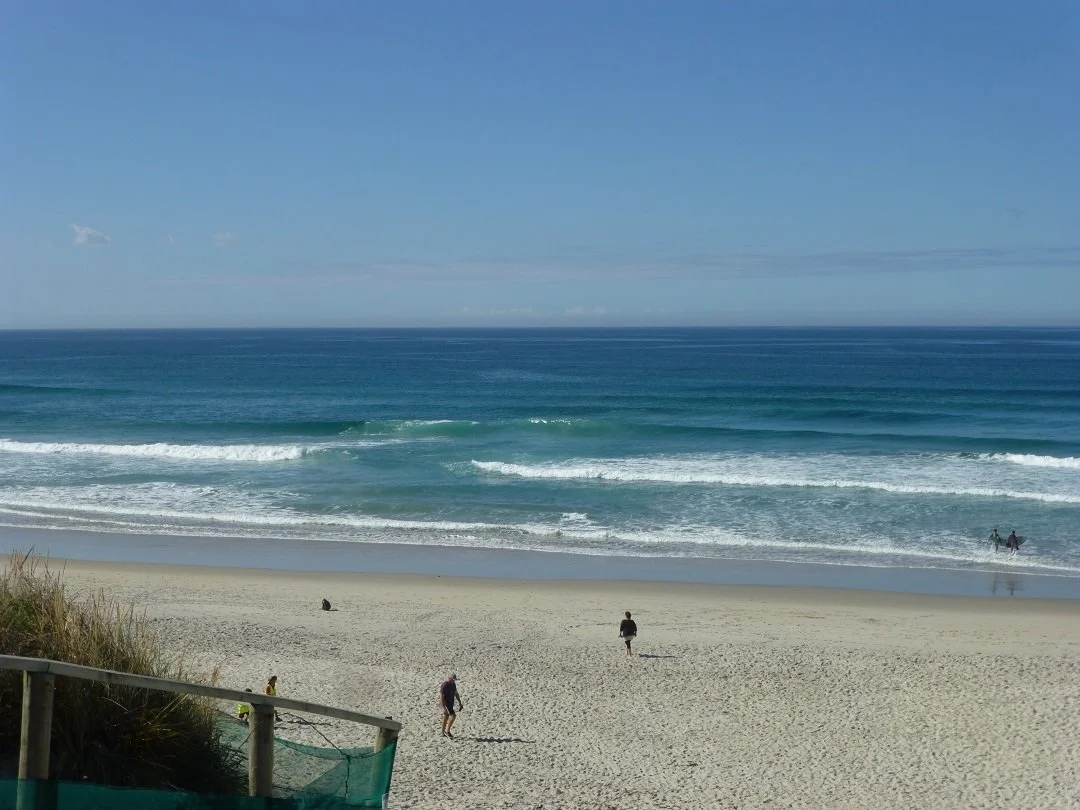 Water Wise: Beyond the Shorebreak
Coastal science and earlier warnings · South Korea
His interview explores how research can help anticipate rip-current hazards and support the people protecting our beaches.
Junwoo Choi and Steve Elgar. Their study at Duck, North Carolina, examines how changes in underwater sandbars and channels affect rip-current predictions under the same wave conditions.
Rip-Current Likelihoods and Predictions on Two Different Bathymetries Observed within 1 Week on the Same Beach in Duck, North Carolina.
Search for additional papers by Dr. Junwoo Choi. This is a research search, not a verified individual publication.
AI detection and rip current recognition · Japan
Toshinori Ishikawa, Ryo Shimada, Naoya Fujita and Sarina Wada. Evaluates a camera-based system that detects rip currents and sends alerts to beachgoers and lifesavers.
APAC 2025 conference · Published 2026
Sarina Wada, Toshinori Ishikawa and Tsutomu Komine. Uses virtual reality and eye-tracking to explore which rip currents people find difficult to recognize.
APAC 2025 conference · Published 2026
Their 2011 paper asks how swimmer behavior and rip flow should shape safety messages.
A field study coauthored by Brander and MacMahan compares floating and swimming strategies in a specific rip setting.
An accessible account of Brander and MacMahan’s research and why no single escape response works in every rip current.
Brander’s research group studies both the currents and what beachgoers know about them.
Rip current education on Kauaʻi
Australian lifeguard Bruce “Hoppo” Hopkins led a hands-on rip current clinic in Hanalei in February 2026. Honolulu Civil Beat documented the clinic, including its Float to Survive lessons, through photographs and reporting.
Rip currents vary by beach and conditions. If you are caught in one, stay afloat, signal for help, and follow lifeguard instructions where available.
From the three-person interview
Jaz Lawes, Sam Fien, and Tyler Anderson discuss support for lifeguards after critical incidents.
Fien, Lawes, and colleagues’ 2023 study of exposure to difficult events, stress symptoms, and social support.
The study discussed in the interview. Its survey closed in August 2026; check this page for findings when published.
Information on peer support, resilience training, and help after critical incidents.
Training information from the Association of Aquatic Professionals and ILCIRA.
Explore statewide Hawaiʻi guidance and Kauaʻi programs, with Maui and Hawaiʻi Island resources to be added as this collection grows. For beach planning, the Brian and Haʻa Keaulana video, and children’s resources, see Visitors and families. Check county program pages for current registration details.
Waterman and lifeguard Brian Keaulana and his daughter Haʻa share Hawaiʻi ocean knowledge, respect for changing conditions, and advice for visitors and families.
Official State of Hawaiʻi ocean safety guidance to review before heading to the beach, including hazards, conditions and safer choices.
Hawaiʻi’s statewide roadmap for drowning prevention, developed by the Hawaiʻi Water Safety Coalition. Includes recommendations for education, lifeguarding, rescue, equity, data, and collaboration across the islands. Read the full plan (PDF).
A statewide collaboration advancing drowning prevention, water safety education, and implementation of the 2025 Hawaiʻi Water Safety Plan.
Meet the statewide lifeguard association and explore its ocean safety education.
State guidance on ocean hazards, warning signs, snorkeling, and lifeguarded beaches.
Information about Hawaiʻi’s specialty license plate honoring Duke Kahanamoku and his ocean legacy.
Find lifeguarded beaches and information about lifeguard locations.
New North Shore tower installed October 15, 2026. Lifeguards are stationed daily, 8 a.m.–6 p.m.; this location is missing from the state list.
Explore local water safety education, videos and lifeguard resources.
Discussed by Chris Pico. Learn about the app and local emergency alerts.
County swimming lessons and pool program information. Check current registration details.
Ocean clinics rooted in Hawaiian culture and care for the environment.
School programs and water safety education for keiki.
Freediving and spearfishing safety programs for adults and youth.
Support for ocean culture, education, and community programs.
Drowning prevention education and resources.
Deep Dive Into Water Safety
Explore the full collection and listen here.
Follow the podcast
Choose your app, then tap Follow for new episodes.
Choose where to listen
You can listen to every interview here on Deep Dive.
Listen on this websiteUse your browser’s Back button to return. If a podcast app opens, return to your browser.
Deep Dive Into Water Safety began on Kauaʻi in May 2025 with a simple belief: drowning is preventable, and the knowledge to save lives should be shared.
Inspired by the 2025 Hawaiʻi Water Safety Plan and the need for greater public awareness, the radio program and podcast was created to bring important conversations about drowning prevention beyond conferences, research publications, and professional organizations and into our communities.
The program brings together lifeguards, scientists, medical professionals, educators, and water safety leaders from Hawaiʻi and around the world. Their conversations explore why drowning happens, what research is revealing, and how evidence can lead to more effective prevention.
Our commitment is to continue sharing evidence-based research, emerging discoveries, and practical knowledge from water safety experts around the world.
By connecting scientific research with real-world experience, Deep Dive Into Water Safety seeks to challenge assumptions, encourage collaboration, and make reliable water safety information accessible to everyone.
Because the more we understand about drowning, the more lives we can help save.
Produced and hosted on Kauaʻi, Hawaiʻi. Broadcast on KKCR Community Radio and available as a podcast worldwide.